Practice

The approach is applied across highly diverse clinical contexts. What connects them is not the type of population, but the underlying principle: in each setting, the starting point is what the person brings, rather than what the therapist has planned.
Childhood and Socio-Educational Contexts
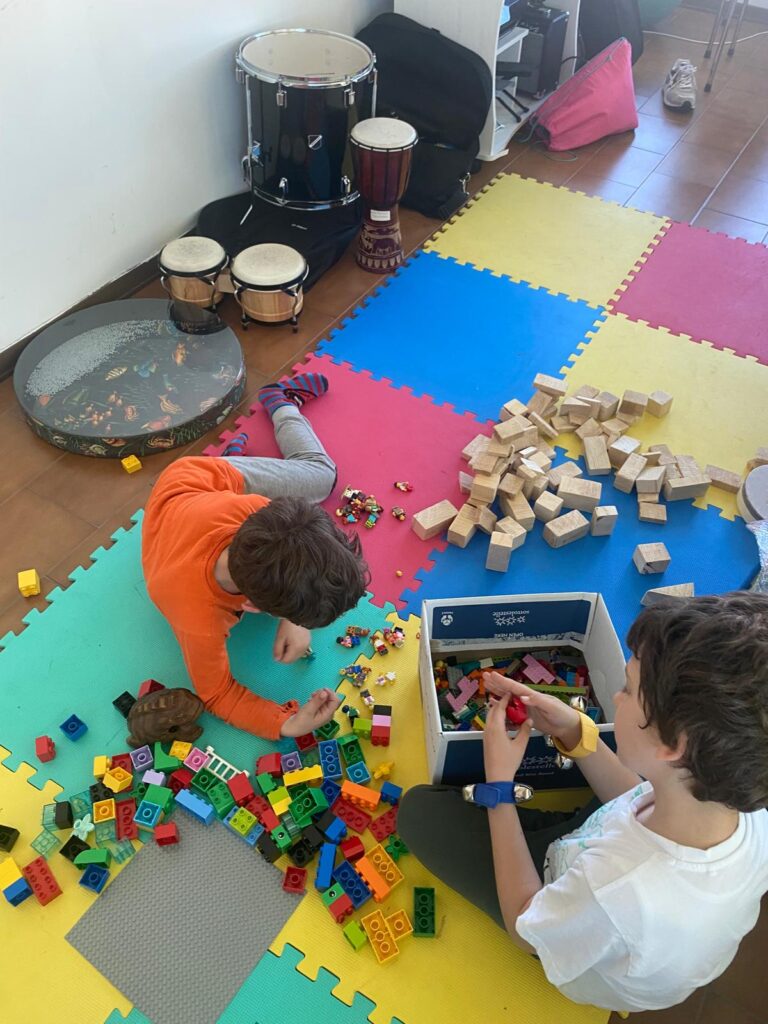
In sessions with children, the sound environment becomes a territory for free exploration. The materials (percussion instruments, balls, fabrics, construction materials) are available without instructions for use. The child chooses, throws, builds, pauses. The music therapist reads the arc of this process — its activation, its development, and its resolution — and accompanies without directing.
The session follows a three-phase structure that the child gradually learns to anticipate, and this anticipation is therapeutic in itself: it creates a sense of safety within a space that respects the child’s own initiative.
Adults with Motor Disabilities and Dependency
With individuals who have reduced mobility, the principle does not change; the scale changes.
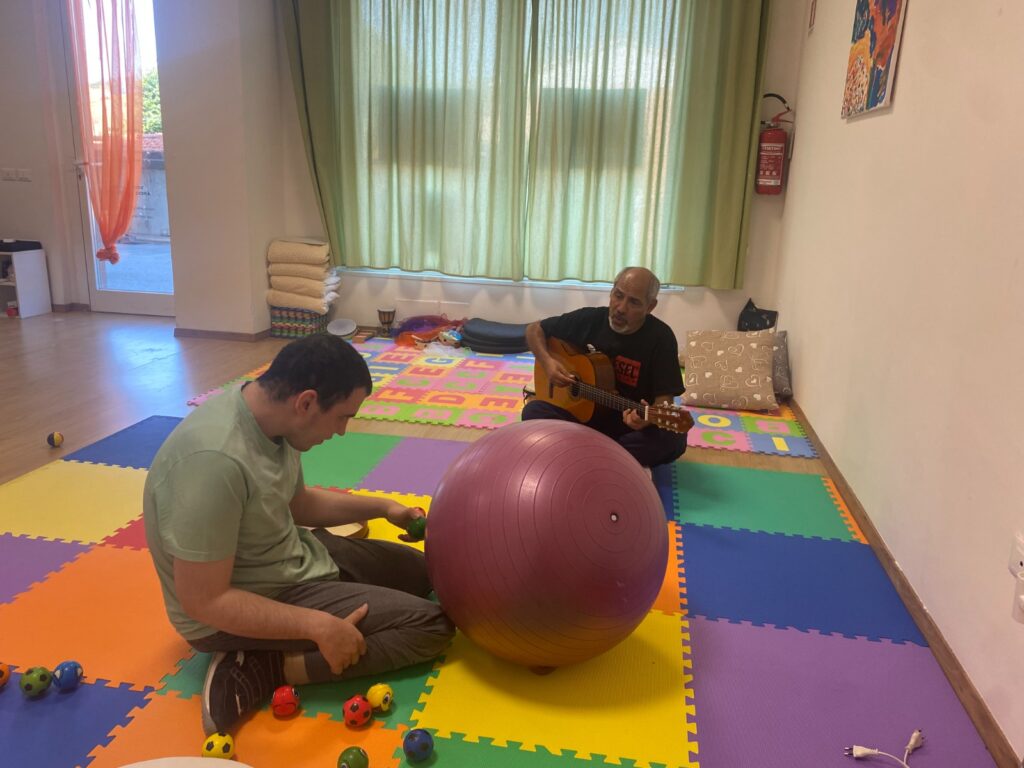
A spontaneous impulse in a wheelchair while listening to a familiar song, or a body that (once transferred to the floor with support) surrenders to the rocking movement of a large therapy ball that holds its weight and restores a form of autonomous movement, or a vocal response that emerges without having been requested — all of these are expressions of initiative, agency, and bodily narrative.
Music creates the space that the body cannot physically move through: the familiar song that activates from within, the rhythm that provides support, the melody that gradually extends until the system finds its own balance.
Complex Sensory and Motor Disabilities — Lega del Filo d’Oro
In the most challenging context, working with people without vision and with severely reduced mobility, the approach reaches its most essential form.
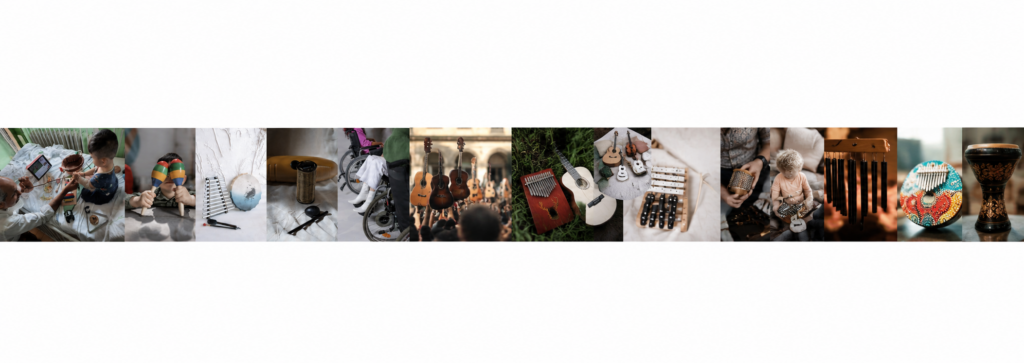
The voice (a pa! marking the pulse, a melody being sung) becomes a bodily expression of rhythm when the rest of the body cannot express itself in other ways. A tambourine, a maraca, or a small drum amplifies this minimal gesture and projects it into the surrounding space.
And the music therapist, moving throughout the room, creates a three-dimensional sound geography that each person explores through their own listening, through their own history, through their own emotions.
There is no one who leads and one who is led.
Each person participates from their own lived experience.
That is enough.
That is everything.